
A sustainable workout routine matters most after the first burst of excitement fades. Motivation is helpful, but it is not reliable enough to carry every week. Life gets busy. Energy changes. Stress rises. A lasting routine must work during normal, imperfect seasons. That means it should be flexible, clear, and realistic. It should also feel rewarding enough to repeat. You are not trying to prove toughness every day. You are creating a pattern that keeps you moving for months and years.
Minimums keep habits alive. A minimum workout might last ten minutes. It might include one circuit, one walk, or one mobility session. This is not failure. It is continuity. Recovery-friendly workouts help you stay engaged when energy feels low. They prevent the all-or-nothing cycle. You can do more when you feel strong. You can do less when life demands it. The point is staying connected to the habit.
Your routine should match your schedule. Look at workdays, errands, sleep, and family obligations. Place harder sessions where energy is highest. Use lighter movement on crowded days. Keep workouts close to existing routines. Morning training may work for some people. Lunch sessions may work for others. Evening walks may feel more realistic. The best schedule is not the most impressive. It is the one you can repeat.
Identity grows through repeated evidence. Every completed workout says you are someone who trains. Every restart says you do not quit permanently. This matters because results take time. Long-term fitness consistency becomes easier when movement feels part of who you are. You stop negotiating every session from scratch. The habit becomes familiar. Familiarity lowers resistance. Over time, exercise feels less like a project and more like maintenance.
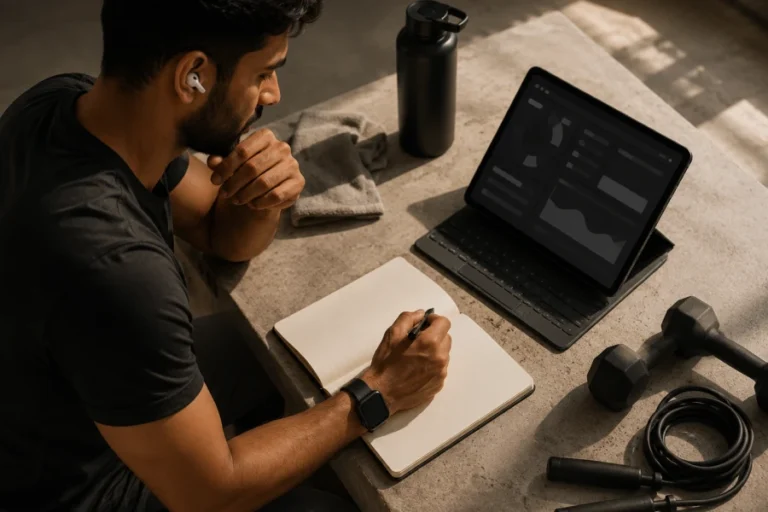
Visible progress keeps people engaged. Track more than weight. Notice better stamina, stronger lifts, steadier energy, and improved mood. Record workouts in a simple format. Keep notes short enough to continue. Review trends every few weeks. Small improvements are easy to miss when you look daily. A wider view shows momentum. That perspective protects patience. Progress feels more motivating when you can actually see it.
Technology can reduce planning fatigue. It can help organize workouts, suggest alternatives, and track trends. Adaptive workout routine support is useful when life changes quickly. You can ask for shorter sessions, equipment swaps, or recovery adjustments. Still, you remain responsible for safety and effort. Treat technology as a helper. Use it to simplify decisions. Avoid using it as another distraction. The goal is better action, not endless planning.
Enjoyment is not shallow. It helps routines last. Choose some movements you genuinely like. Train in an environment that feels good. Use music, outdoor routes, or simple rewards. Leave sessions feeling successful often enough to return. Not every workout needs to be fun. The overall experience should feel worthwhile. When training supports your life, motivation becomes less fragile. A sustainable plan keeps working because it respects the person following it.



Leave a comment