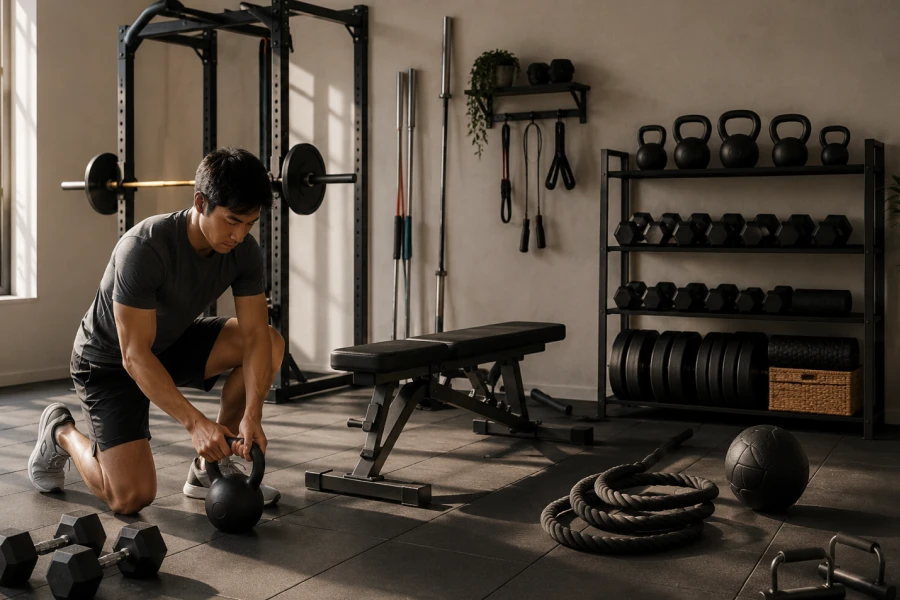
Build a home gym with intention, and your space can become one of the easiest ways to stay consistent. The biggest mistake is buying equipment before defining the routine. A strong setup begins with your goals, available room, budget, and preferred workouts. You do not need everything. You need equipment that earns its place. A small corner can support strength, mobility, conditioning, and recovery when planned well. The space should feel inviting, not cluttered. When the environment removes excuses, exercise becomes easier to start. That is the real value.
Your goals should decide your equipment. Strength training needs different tools than yoga or cardio. A beginner may need less than an advanced lifter. Small spaces need compact choices. Busy schedules need quick access. Home gym planning prevents expensive clutter. It also helps you avoid trendy purchases that do not match your habits. Write down what you will actually do weekly. Then design around that routine. The best setup supports behavior first.
Versatile equipment saves money and space. Adjustable dumbbells, resistance bands, a mat, and a sturdy bench can support many workouts. A pull-up bar may help some users. A jump rope may suit others. Storage should be considered from the beginning. Tools that stack, fold, or hang keep the room usable. Compact fitness equipment works best when it serves multiple movements. Avoid buying bulky machines too early. Start with essentials. Expand only when a real need appears.
Convenience changes behavior. You no longer need a commute. You do not wait for machines. You can train between tasks. This lowers the barrier on low-energy days. A home workout consistency system depends on visibility and ease. Keep the space clean. Place frequently used gear within reach. Make the first step obvious. Even a short session counts. Consistency grows when starting feels simple.
Measure your space carefully. Leave room to move safely. Check ceiling height for overhead exercises. Consider flooring, noise, ventilation, and lighting. A mat may protect the floor. Rubber tiles can help with impact. Mirrors are optional, but good lighting matters. Storage baskets can prevent scattered equipment. Keep walkways clear. A functional space feels calm because everything has a place.
A great setup does not require a large investment. Begin with equipment that supports the most exercises. Buy gradually instead of rushing. Test your routine for several weeks before upgrading. Budget home gym ideas are strongest when they prioritize usefulness. Used equipment can work if it is safe. Quality matters more for items that carry load. Cheap tools are not always economical. Spend where durability protects you. Save where simplicity is enough.
Your space should evolve with you. Rearrange equipment when routines change. Add small upgrades when they solve real problems. Keep cleaning supplies nearby. Rotate music or lighting to refresh motivation. Do not let unused gear dominate the room. A home gym should feel like a tool, not a storage problem. Review the setup monthly. Remove friction where you find it. When the room works well, workouts feel more natural.



Leave a comment