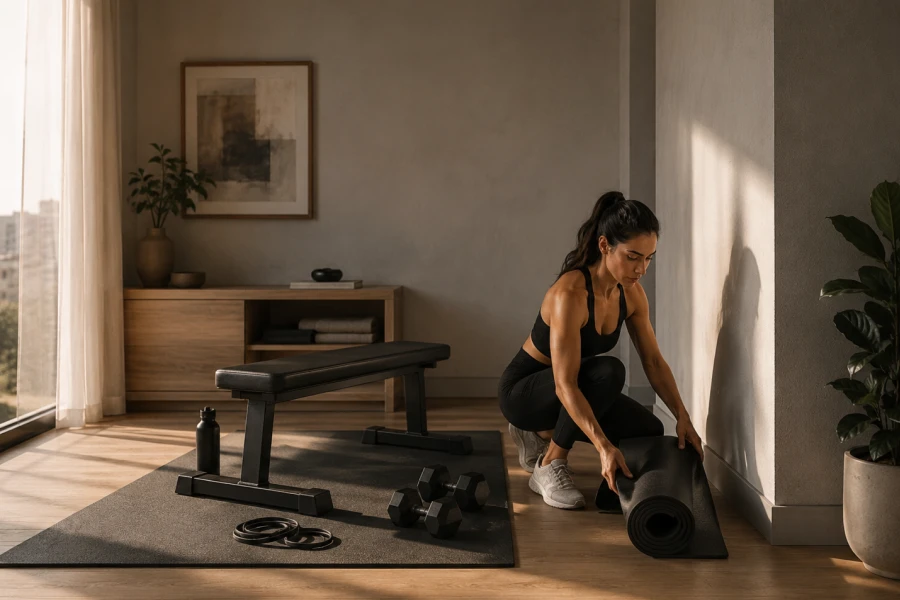
Beginner home gym setup should make exercise feel less intimidating from day one. New routines often fail when the environment feels confusing. Too much equipment creates pressure. Too little planning creates frustration. A better setup starts with simple tools, clear space, and realistic expectations. You are building a place to practice, not a showroom. The room should help you begin quickly. It should also support gradual progress. When your setup feels approachable, workouts become easier to repeat. That confidence matters as much as the equipment.
Simplicity protects momentum. Start with a mat, resistance bands, and one strength option. Dumbbells, kettlebells, or adjustable weights can work. Choose what feels safe and practical. Beginner strength training does not need complicated machines. It needs good form, consistency, and progression. Learn basic movements first. Practice slowly before adding load. Your setup should reduce decisions. Fewer tools can create better focus.
Your training zone should feel obvious. Clear enough floor space for movement. Keep sharp furniture edges away. Use a mat to define the area. Place water nearby. Keep shoes, towel, and timer in one place. These details sound small. They reduce friction when motivation is low. A clear zone tells your brain it is time to move. That cue helps the habit form faster.
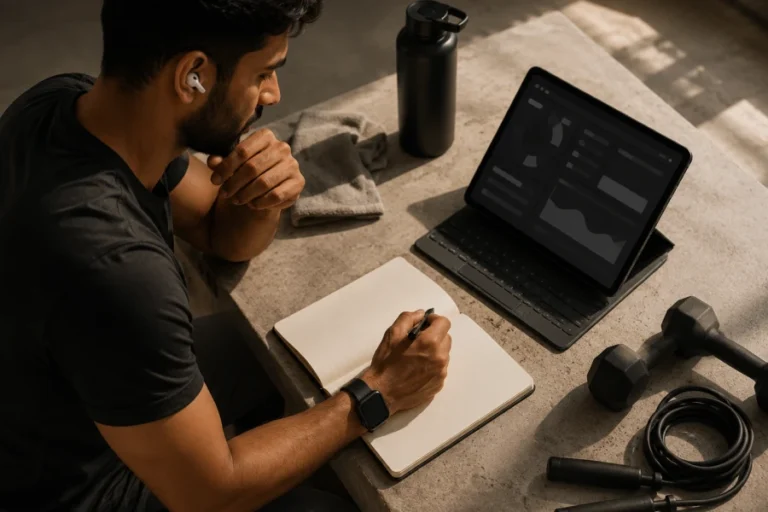
Confidence grows through successful starts. Your first workouts should feel manageable. Choose sessions that leave energy for tomorrow. Track completed workouts instead of only tracking intensity. This creates a visible record of follow-through. Resistance training basics give beginners a reliable structure. Push, pull, squat, hinge, and core movements cover the essentials. Repeat them until they feel familiar. Then increase difficulty gradually. Confidence comes from knowing what to do next.
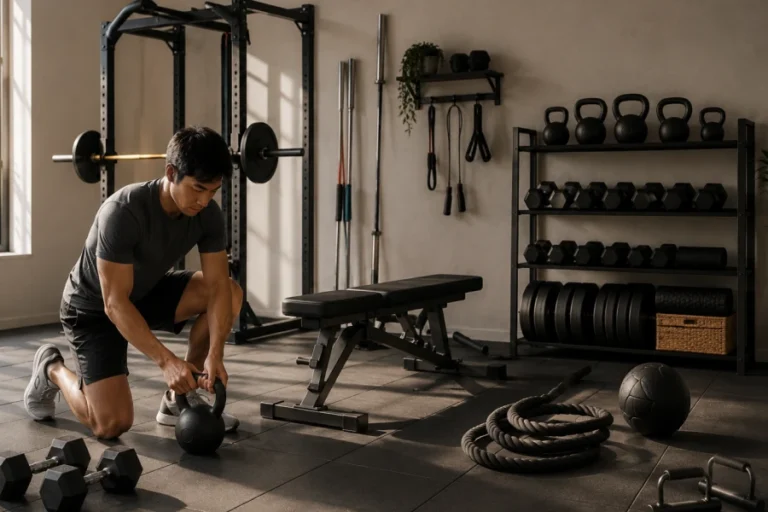
Clutter weakens motivation. Equipment should be easy to access and easy to return. Use baskets, shelves, hooks, or a small rack. Store heavier tools safely. Keep bands untangled. Put accessories where you can see them. Avoid hiding everything so deeply that workouts feel inconvenient. Good storage supports quick sessions. It also keeps your home looking calm. A beginner setup should fit your life, not fight it.
A setup becomes valuable when it supports a schedule. Pick three training windows each week. Keep them short at first. Repeat the same basic structure. This makes progress easier to notice. Fitness routine at home planning works best with backup sessions. Ten minutes is better than quitting. A walk can replace a missed workout when needed. Flexibility keeps the routine alive. The goal is steady participation, not perfect performance.
Do not rush upgrades. Let your habits reveal what you need. If bands feel too easy, add resistance. If dumbbells limit progression, consider adjustable weights. If floor work hurts, improve the mat. Space-saving gym gear should solve a real problem. Buy tools after you understand your routine. This prevents regret. It also keeps the room usable. A home gym grows best when your consistency grows first.


Leave a comment