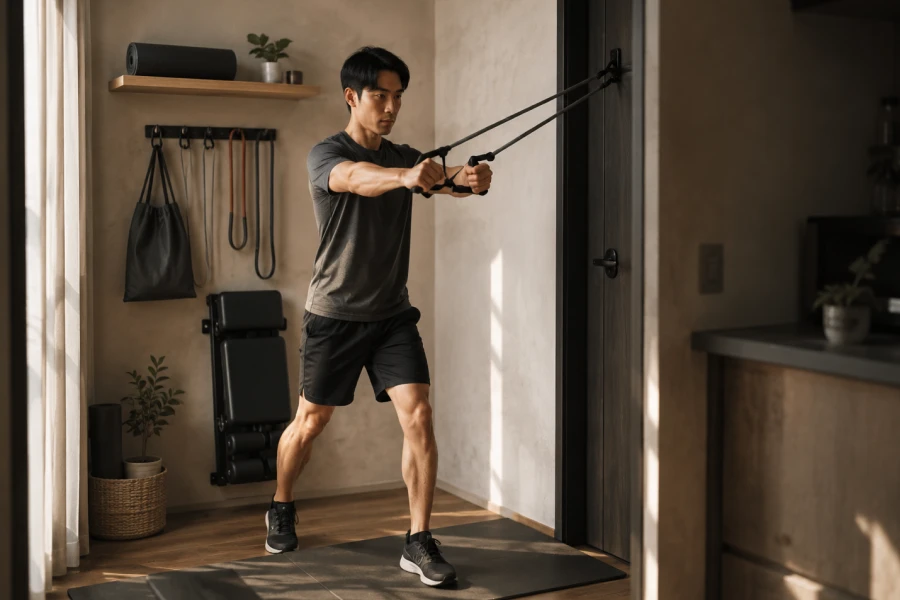
Small space home gym planning proves that a serious routine does not require a spare room. A hallway corner, bedroom wall, garage nook, or living room zone can work. The key is choosing compact tools and smart storage. You need open floor space more than impressive equipment. You also need a setup that disappears when daily life resumes. That balance keeps the room functional. It also makes training less stressful. A small space can still feel polished, focused, and motivating. The goal is thoughtful design, not more square footage.
Editing is the secret to small-space success. Every item must justify its footprint. Keep only tools you use often. Avoid equipment that solves imaginary problems. Choose pieces that support several exercises. Small-space workout setup works when movement stays clear. You should be able to squat, hinge, stretch, and press safely. Storage should not block the routine. A lean setup feels better than a crowded one. Serious training comes from consistency, not clutter.
Walls can solve many storage problems. Hooks can hold bands. Shelves can organize towels, blocks, and small accessories. A vertical rack can store dumbbells neatly. Foldable benches can lean against a wall. Baskets can hide smaller tools between sessions. This keeps the floor open. Open floor space makes movement feel safer. It also keeps the room from feeling chaotic. A compact gym should look intentional even when it is small.
Limited room can actually protect your budget. You buy less because you have to choose carefully. That encourages smarter decisions. A few resistance bands, adjustable dumbbells, and a quality mat can support many workouts. Smart equipment choices help you avoid bulky mistakes. Each purchase should match a movement pattern. Think push, pull, squat, hinge, core, and mobility. If a tool covers more than one pattern, it deserves attention. This approach keeps spending focused. It also keeps the space breathable.
A reset routine protects your home. Put every item away after training. Wipe down surfaces quickly. Roll the mat neatly. Keep cords, shoes, and towels contained. This makes the space feel ready next time. It also keeps shared rooms peaceful. A gym that irritates your household will not last. Make cleanup part of the workout. The routine feels more sustainable when the room returns to normal.
Apartment training needs extra consideration. Noise matters. Floor protection matters. Jumping may not suit upstairs neighbors. Low-impact strength sessions can still be challenging. Apartment workout station planning should include mats, bands, dumbbells, and quiet movement options. Step-ups, split squats, rows, presses, and carries can work well. Use controlled tempo to increase difficulty. Respect the building while still training seriously. A quiet routine can still build strength. Thoughtful limits often create better habits.
Visibility helps you start. Keep one cue in sight. It might be a mat, timer, water bottle, or training card. Avoid letting the setup become visual noise. A clean cue works better than scattered equipment. Light also matters. Open curtains or add a warm lamp. The space should invite movement. It should not feel like punishment. When the corner looks ready, your routine feels closer.


Leave a comment